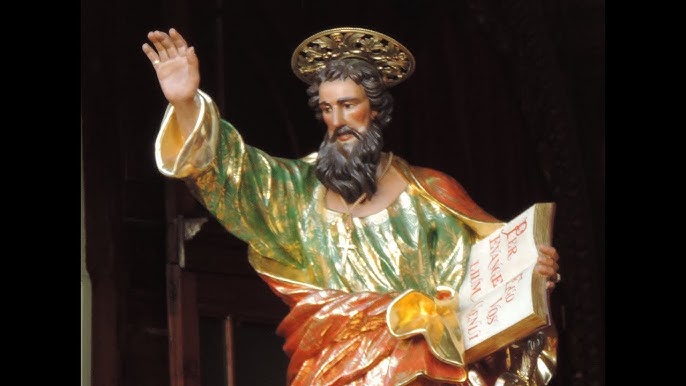
The Maltese Pauline Cult through the Ages:
Sacred Sites, Culture, and the Arts
Devotion to St Paul in Malta is multifaceted and extensive, finding expression in sacred sites, art and architecture, literature, archaeology, music, and long-standing popular traditions.
The Maltese Pauline cult is vast, deeply rooted, and integral to Maltese history and culture, as reflected in art, literature, archaeology, and tradition. This brief overview provides a concise yet comprehensive survey of the Pauline cult in Malta, from its origins in the shipwreck of St Paul, through the medieval period, and up to the present day. It examines the historical, architectural, literary, and cultural dimensions of this tradition, in both its formal and informal expressions.
Before the late Middle Ages, evidence for the survival of Christianity during the Arab occupation of Malta (870–1090) is limited. This period of occupation came to an end when Roger the Norman took control of Sicily and the Maltese Islands in 1090. From this point onwards, Christianity re-emerged openly and progressively shaped Malta’s religious identity, leaving traces not only in historical records but also in artistic, literary, and social traditions. It is within this broad historical development that the Pauline cult took root and evolved, finding expression in both formal and informal cultural spheres.
By formal culture, we refer to paintings and sculptures, scholarly historical and literary works on the Pauline cult, musical compositions, and related cultural expressions.
By informal culture, we mean culture as a way of life: popular devotion and the religious and secular practices embedded in everyday Maltese life. These range from statues carved into house façades to year-long discussions about the festa and its preparations, culminating in the celebration of the Maltese festa itself, which lies at the heart of popular culture.
Two major cultural events with strong popular participation stand out: the traditional Maltese feasts (festi) of St Paul, celebrated annually in every locality dedicated to him in Malta and Gozo; and the Agape Festival, organised by Fondazzjoni Paulus, which is essentially a festival of Maltese Christian art and culture, with particular emphasis on Pauline heritage.
Religious Sites, Monuments, and Sacred Places as Assets for Sustainable Cultural Tourism
The religious traveller seeks a spiritual experience as part of a lifelong spiritual journey. In this sense, travel itself becomes a stage in the broader pilgrimage of life.
This spiritual search is expressed through visits to sacred sites, monuments, and holy places. For believers, encountering these sites means entering into the specific spiritual atmosphere and significance associated with each location. Such encounters offer spiritual and psychological strength, sustaining the believer along life’s journey, which ultimately prepares the soul for eternity.
In the case of religious sites connected to St Paul, the believer encounters his charisma, teaching, and God’s salvific plan for humanity revealed through him—the Apostle to the Gentiles, in whom divine grace was made manifest. To walk in St Paul’s footsteps is to live a Pauline spiritual experience, seeking what Paul himself proclaimed: Jesus Christ, eternal life, and peace for all who believe.
The footsteps of St Paul constitute a versatile experience, encompassing archaeology, architecture, history, art, and culture. Together, these elements shape the believer’s spiritual journey along the Pauline routes. Spirituality, in its broader sense, forms part of every human life, whether for regular churchgoers or for those who choose to live their spirituality privately.
This emphasis is essential since stakeholders must ensure that religious sites and sacred places are respected first and foremost as holy spaces and not regarded primarily as opportunities for financial gain. To strip such places of their sacred character is to diminish not only their religious significance but also their historical, archaeological, and architectural value.
Proper conduct is therefore a matter of respect and sensitivity, reflected in appropriate dress and behaviour. It is commendable to observe visitors speaking softly, maintaining silence, reflecting, praying, and listening to the voice of their own conscience.
Sustainable tourism in relation to sacred sites is possible only if the religious character of these places is protected. They must be preserved as holy spaces, valued for what they truly are, and not commercialised to the extent that profit becomes the primary objective.
Equally important is the provision of accessible and accurate information, enabling visitors to appreciate both the historical and spiritual dimensions of these sites. The ultimate purpose of such visits is to inspire and invigorate the human spirit.
Why St Paul? Walking the Cammino Sancti Pauli
From the Acts of the Apostles and his Letters, we gain a vivid portrait of St Paul, whose writings constitute the earliest Christian texts, predating even the Gospels. His preaching, charisma, intellectual depth, and tireless energy were instrumental in shaping Christianity and spreading it from Jerusalem throughout the Roman world.
Establishing and promoting St Paul’s footsteps is therefore essential. Following in his footsteps entails undertaking a physical journey imbued with a profound spiritual purpose, intertwined with the historical, archaeological, anthropological, and socio-political realities of his time and those that followed. To walk in the footsteps of St Paul is to relive the early Christian experience and rediscover Christ.
In Ancient Christianities: The First Five Hundred Years, Paula Fredriksen argues that Christianity could not have spread so rapidly or so effectively—despite persecution—without the missionary zeal of St Paul, who travelled relentlessly across the known world.
Similarly, J. M. Roberts notes in History of Europe (Penguin Books, 1996, pp. 63–64):
“After Jesus himself, he is the most important figure in the history of Christianity… it was Paul’s missionary work, carried out through a series of voyages and journeys across much of the eastern Mediterranean—and the decision of the Jerusalem Council, taken at his urging—that Gentiles should not be asked to conform to Jewish law, which released what was to become the most successful of world religions from its Jewish cradle.”
It can be argued that Paul was the first conscious architect of Christianity. Much of Christian theology has its roots in his interpretation of Jesus’ message, as evidenced by the controversies recorded in the Acts of the Apostles.
Paul’s mission unfolded in a world largely unified by Roman governance, law, and infrastructure, which allowed relatively safe travel. The widespread use of Greek further facilitated communication. Within this context, Christianity expanded dramatically within fifty years of the Crucifixion.
Almost the last we hear of Paul is his appeal, as a Roman citizen, in AD 60, following accusations of sedition and profanation of the Temple in Jerusalem. He was sent to Rome to await trial, and tradition holds that he was martyred there in AD 67.
On the road to Damascus, Paul encountered the risen Christ and was entrusted with the mission of proclaiming the Gospel to the nations. Through him, the Good News spread across the world—a theme commemorated in a hymn premiered at the annual Fondazzjoni Paulus concert in February 2026.
St Paul’s Shipwreck and the Pauline Cult in Malta
According to the Acts of the Apostles, during his journey from Caesarea to Rome, St Paul was shipwrecked on the island of Melita, identified as Malta. Luke’s detailed account (Acts 27–28) is widely regarded as one of the most accurate ancient descriptions of seafaring. This passage is read annually during the liturgy for the Feast of St Paul’s Shipwreck in Malta.
For centuries, tradition has identified St Paul’s Bay as the site of the shipwreck, where all 276 survivors were welcomed with extraordinary kindness. Alternative theories proposed over the past 250 years have failed to provide compelling archaeological or textual evidence.
Recent underwater discoveries have renewed scholarly interest, offering strong support for the traditional site. Artefacts recovered correspond closely with Luke’s account and Malta’s coastal topography.
In PAULUS: The Shipwreck, 60 AD, Mark Gatt presents a detailed reconstruction of the voyage, introducing the “Sea Anchor Theory”, which suggests that expert seamanship—guided by Divine Providence—ultimately brought the ship safely to Malta.
Today, divers and pilgrims from across Europe and beyond visit the waters near St Paul’s Islands. Nearby stands San Pawl Milqi, traditionally identified as the residence of Publius, the Roman protos, where Paul is said to have healed his father.
St Paul’s Grotto, Rabat, Malta
The most prominent Pauline site in Malta is St Paul’s Grotto in Rabat, internationally recognised since the Middle Ages as the place where St Paul resided and preached during his three-month stay on the island. Its location, just outside the walls of ancient Mdina, is historically and geographically coherent.
Over time, a church developed above the Grotto, known in medieval sources as San Paolo fuori le mura, echoing the Roman basilica.
As researcher Aristarco Cefai notes:
“The Grotto of St Paul in Rabat is the foundation stone of the Church in Malta. This declaration was made by the Cathedral Chapter of Mdina on 13 May 1617. The Grotto holds a special place in the heart of every Maltese Catholic, regarded as the birthplace of the religion so dear to them, which is an intrinsic part of their identity.”
The Grotto forms part of a vast complex that includes early Christian hypogea, medieval crypts, churches, a former convent, and a museum of artistic and devotional heritage.
Tradition holds that Paul established the first Christian community here and consecrated Publius as Malta’s first bishop.
The site flourished under the Knights of St John, and the church built above St Paul’s Grotto was elevated to the status of a minor basilica by Pope Francis in 2020. It has been visited by Popes John Paul II, Benedict XVI, and Francis.
The Maltese Festa
The Maltese festa, recognised by UNESCO as Intangible Cultural Heritage, represents a vibrant fusion of faith, culture, and communal identity. In parishes dedicated to St Paul, these celebrations include religious ceremonies, street decorations, band marches, and fireworks.
Notable Pauline feasts in Malta include:
- St Paul’s Shipwreck (10 February, Valletta)
- St Paul, Munxar (Gozo)
- St Peter and St Paul (Imnarja, 29 June)
- Martyrdom of St Paul (Rabat, Malta)
- Conversion of St Paul (Ħal-Safi)
The Rabat Agape Festival and the International Pauline Network
The Rabat Agape Festival is the flagship initiative of Fondazzjoni Paulus. Its principal event is the annual concert of sacred Pauline music at St Paul’s Basilica, performed by the Malta Philharmonic Orchestra and broadcast nationally.
Founded formally in 2014, Fondazzjoni Paulus is a voluntary, non-profit organisation dedicated to promoting the Pauline cult through art, music, scholarship, and cultural initiatives.
The recently launched International Pauline Network aims to connect Pauline sanctuaries, churches, and organisations worldwide through a dedicated website, offering historical information, scholarly resources, and contact details.
Conclusion
Establishing St Paul’s footsteps should not be viewed merely as an opportunity for religious tourism, but as a holistic project encompassing historical, cultural, spiritual, and social dimensions. Mapping and promoting the Pauline routes will strengthen cultural tourism across participating countries and foster deeper international collaboration.
Fondazzjoni Paulus looks forward to contributing to this endeavour from the Maltese perspective and welcomes further dialogue.
We conclude with the acclamations traditionally proclaimed during Pauline feasts in Malta:
Viva l-Magnus! Viva San Pawl!
By Dr Mark Fenech Vella