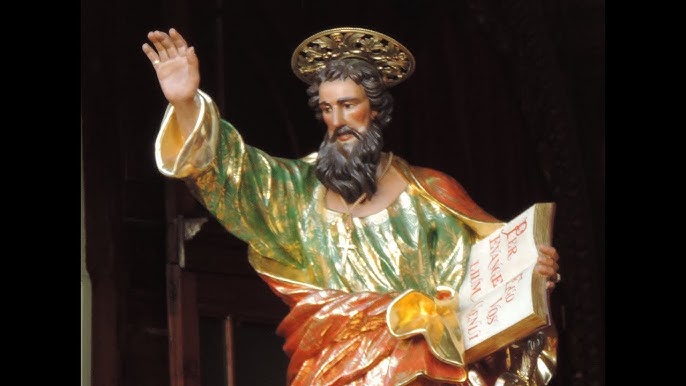
St. Paul’s Grotto
At Rabat, Malta
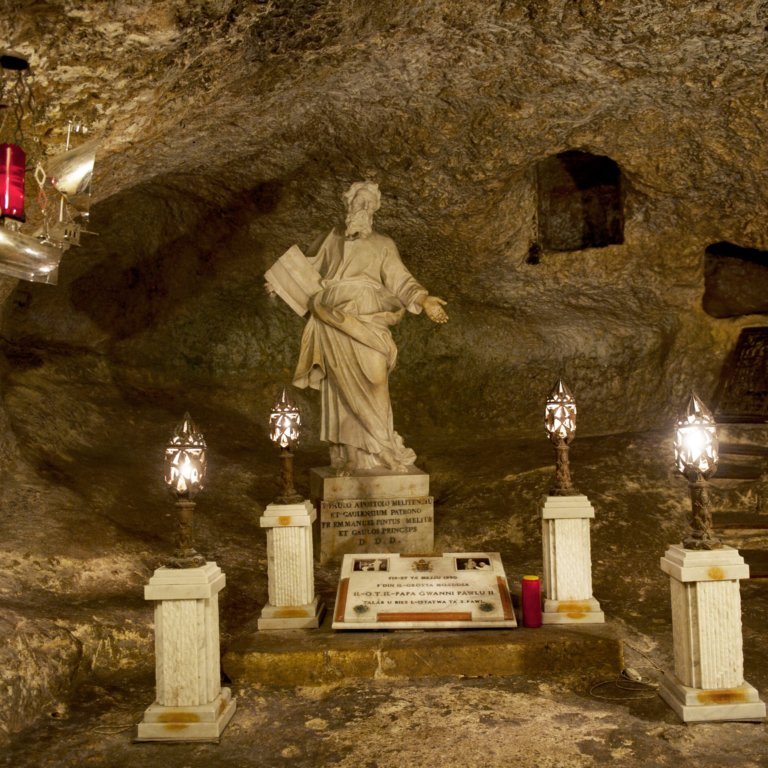
The Grotto of St. Paul in Rabat is ‘the Foundation stone of the Church in Malta’. This outright declaration was made by the Cathedral Chapter of Mdina on 13 May 1617. The Grotto holds a particular and special place in the heart of every Maltese Catholic who has come to regard it as the birthplace of the religion he holds so dear, and which is such an intrinsic part of his very own natural identity. It is indeed the focal point of an entire complex, consisting of an early Christian hypogeum, a late medieval crypt, the churches of St. Paul and of St. Publius, the remains of a large medieval cemetery, a Convento that was originally built to house the clergy officiating at the Grotto, and recently a museum with items of artistic, archaeological, and devotional merit.
According to a long-standing tradition, the Grotto has been considered as the place where the Apostle Paul sojourned during his three-month stay on the Island following his shipwreck in AD60. There, it is held, Paul established the first church, preached, baptised the converts, and consecrated Publius, the first bishop.
The same Grotto is the foundation of the Parish Church of Rabat, built much later and being sited on the outer side of the ditch of the Roman Town, Melite. Following the example of Rome, the Church came to be known as St. Paul outside the city walls. This is confirmed by the Rollo of Bishop Senatore de Mello, dating back to 1436 – which refers to it as capella di San Paolo di fora.
The oldest document on the Grotto and a reference to the cemetery of St. Paul date back to 1366 and refers to it as ecclesia Sancti Pauli de cripta. The large cemetery grew around this Grotto during the middle-ages where many nobles, Maltese and foreigners, with the desire to be buried in this cemetery, allocated the necessary funds in their will for this purpose and for a chapel to be held on their tomb. In 1575, the Apostolic Delegate Mons Pietro Dusina visited 21 of these chapels.
St. Paul’s Grotto was always kept as a Pauline shrine and a centre of pilgrimages and worship. In the early decades of the seventeenth century (1600 – 1624) devotion towards St. Paul’s Grotto was promoted on a popular level in the Catholic Counter-Reformation tradition by a Spanish nobleman from Cordova, Juan Beneguas, who organised pilgrimages and obtained relics and indulgences for the shrine.
By a Brief of Pope Paul V of 6 December 1610, and confirmed on 10 February 1611, the Grotto was separated from the parish and Beneguas was declared as its absolute patron with the right of disposing of it as he deemed fit.
On 22 April 1617 Beneguas formerly offered the jurisdiction of the Grotto to Grand Master Alof de Wignacourt who accepted the offer two days later and nominated Fre Eugenio Ramirez Maldonato as his attorney. Grand Master Wignacourt instituted a Collegiate Church of the Order to carry out regular services in the Church.
Under the Order of St. John, the Grotto fared well. Successive grand masters, especially, Perellos and Pinto, embellished the Church with works of art and silver and endowed it with further property and privileges.
No changes took place during the three months when the French were in charge of the Maltese Islands before they were besieged in Valetta and the Three Cities.
On 3 October 1807 Governor Sir Alexander Ball took over the administration of the Grotto on behalf of the Government who accepted to pay for all the expenses as well as paying a salary to the Collegiates.
It was primarily due to the zeal and activities of Canon Giovanni Gatt Said, who was appointed rector in 1854, that many of the Grotto’s former rights and privileges were won back. He also managed to get even more honours for the Grotto from the Holy See.
The following years were marked by protracted activity by the clergy and parishioners of Rabat to reunite the Grotto with the parish church of St. Paul from which it had been dismembered. These wishes came true by a Papal Bull of 24 November 1962 by means of which Pope John XXIII reunited St. Paul’s Grotto to the Parish Church and upgraded the Parish Church and the College of Chaplains officiating there to the rank of a Collegiate Church.
Pope Francis with the Bull of 4 April 2020 elevated the Church to a Minor Basilica thus endorsing the importance of this Apostolic Sanctuary.
Until this very day and age a good number of pilgrims and worshippers visit the Grotto of St. Paul daily. The most significant moments in the Grotto’s history occurred when their Holiness John Paul II, Benedict XVI and Francis visited the Grotto and spent a few moments in silent prayer witnessed all over the world by means of television on 27 May 1990, 17 April 2010 and 3 April 2022 respectively.


By Aristarco Cefai