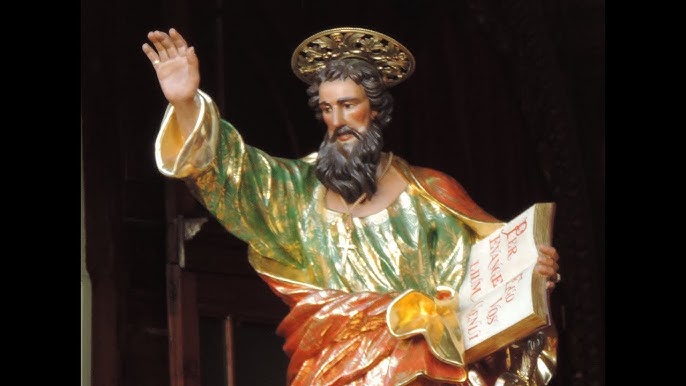
St Paul’s Shipwreck
History, Tradition, and New Discoveries

In chapters 27 and 28 of the Acts of the Apostles, St Luke—who was travelling with the Apostle Paul—provides a remarkably detailed account of their voyage, the ship’s struggle against a violent storm, and its eventual wreck on an island he identifies as Melita. Scholars widely regard this narrative as one of the most accurate contemporary descriptions of ancient seafaring.
For centuries, many have searched for the precise location of this dramatic shipwreck. A long-standing tradition holds that it occurred in St Paul’s Bay, Malta, where the island’s inhabitants—described by Luke as “barbarians”—welcomed all 276 survivors with exceptional kindness.
Over the past 250 years, various researchers have proposed alternative sites, including other Mediterranean islands and even a bay along Malta’s south-eastern coast. However, these alternative theories have consistently lacked the archaeological and textual evidence necessary to challenge the deep-rooted historical and cultural credibility of the traditional location.
Recent underwater discoveries, however, are bringing renewed attention to this subject. Artefacts recovered from the seabed align closely with Luke’s narrative, the coastal topography, and Malta’s long-standing oral and religious traditions. These findings offer compelling support for the traditional site and further illuminate the historical account.
In his book PAULUS The Shipwreck 60 AD, author Mark Gatt presents a thoroughly researched and vividly detailed reconstruction of events on board the ship—from the moment it was caught in a violent tempest, through the harrowing 14-day storm, to the final moments of shipwreck. Gatt also introduces his “Sea Anchor Theory,” which suggests that, despite the Gregale wind pushing the vessel toward the Syrtis (modern-day Libya), it was Divine Providence—working through the expert seamanship of the captain and his crew, who deployed a sea anchor—that ultimately steered the ship toward the Maltese coast.
These insights offer a fascinating blend of history, theology, maritime expertise, and archaeological investigation, breathing new life into one of Christianity’s most iconic sea journeys.


By Mark Gatt